 ITEP Admin
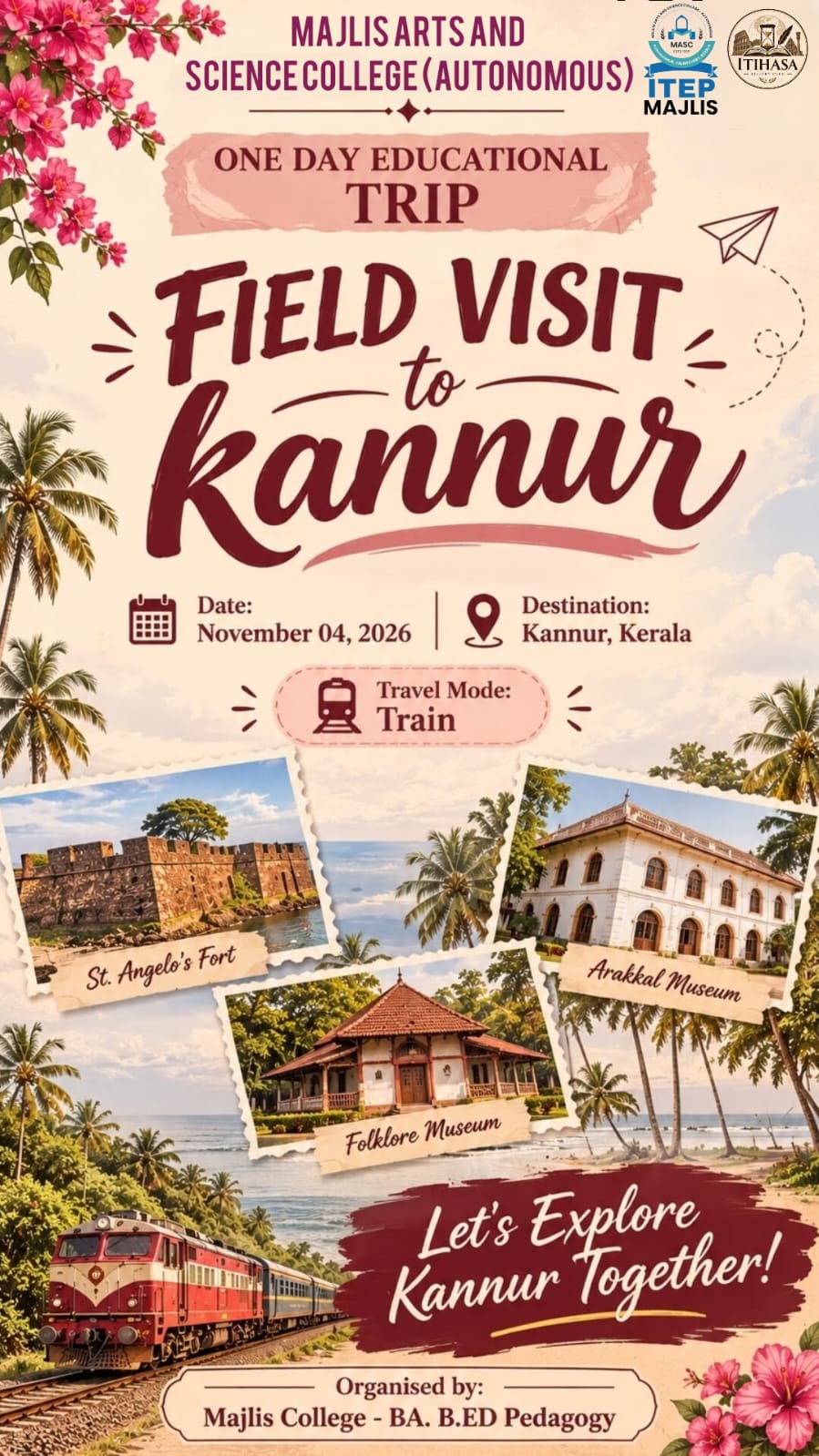
Date: 4 Nov 2026
Group: B.A. B.Ed. Students
Faculty: Aiswarya P., & Afeeda O.
Purpose: Part of CCP Course
REPORT ON THE PEDAGOGY FIELD VISIT TO KANNUR
Institution: Majlis College
Programme: Integrated Teacher Education Programme (ITEP)
Organised as Part of: Pedagogy Class
Date of Visit: 4 November 2026
Destination: Kannur, Kerala
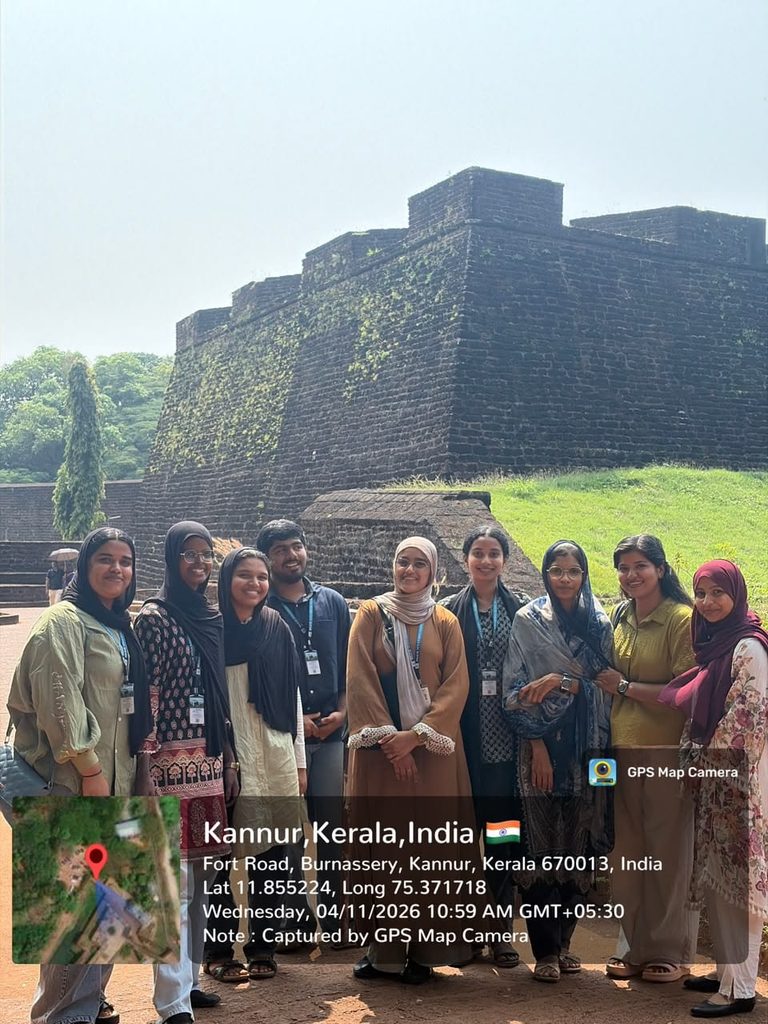
Total Participants: 10 (8 Students and 2 Teachers)
Mode of Transportation: Train and local transportation
As part of the Pedagogy Class, an educational field visit to Kannur was organised on 4 November 2026 by the ITEP students of Majlis College. The main purpose of the visit was to provide students with an opportunity to explore historical and cultural heritage through direct observation and experiential learning.
The visit was planned through a joint discussion between teachers and students on 2 November 2026. After considering the educational importance of different historical and cultural sites, three destinations were selected: St. Angelo Fort, Arakkal Museum and Kerala Folklore Museum.
A total of ten members, including eight students and two teachers, participated in the programme.
Objectives of the Visit
- To understand the historical and cultural heritage of Kannur.
- To explore historically preserved objects and artefacts.
- To understand the historical importance of different heritage sites.
- To connect classroom learning with real-life experiences.
- To develop observation, communication and presentation skills.
- To understand the importance of preserving historical and cultural heritage. Planning and Preparation
The planning process began on 2 November 2026, when teachers and students came together to discuss the proposed Kannur field visit. The destinations were selected based on their historical, cultural and educational significance.
The group decided to visit St. Angelo Fort, Arakkal Museum and Kerala Folklore Museum. Travel arrangements were made by train, along with local transportation to reach the selected destinations.
Participants
Teachers
- Aiswarya AS
- Afeeda O.
Students
Sl. No.| Name| Department
1| Rida Fathima BH| BA History B.Ed.
2| Rafeeda Sherin KK| BA History B.Ed.
3| Nida Fathima M| BA English B.Ed.
4| Minha K| BA English B.Ed.
5| Nasriya PK| BA English B.Ed.
6| Fathima Liya CP| BA English B.Ed.
7| Navneet Krishna K| BA English B.Ed.
8| Rushda MN| B.Sc. B.Ed. Chemistry
Travel Schedule
The journey began at 6:30 AM by train to Kannur. After reaching the destination, the group visited the selected historical and cultural sites using local transportation.
The group completed the visits and returned by the 6:00 PM train.
Places Visited
1) St. Angelo Fort
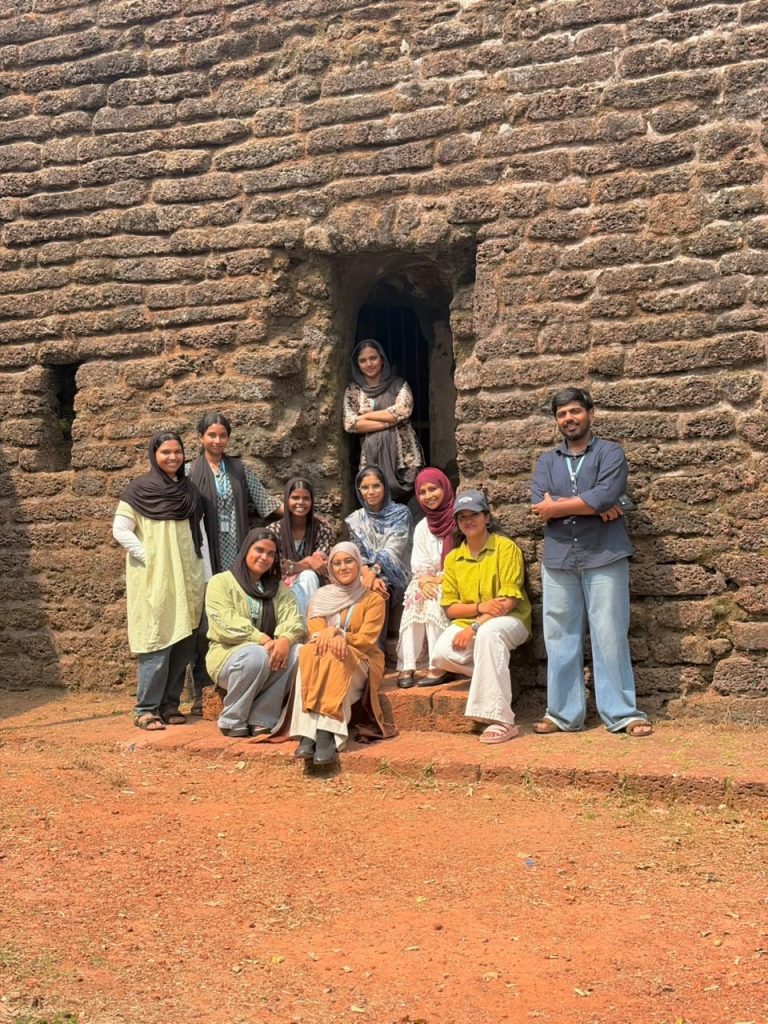
The first destination was St. Angelo Fort, a historically significant monument in Kannur. Built by the Portuguese in 1505, the fort later came under Dutch and British control.
During the visit, students observed the architectural features and historically preserved structures of the fort. They gained an understanding of the colonial history of Kannur and the importance of the fort in the history of European powers in Kerala.
2) Arakkal Museum
The next destination was Arakkal Museum, which preserves the history and heritage of the Arakkal royal family, Kerala’s only Muslim royal family.
Students explored the historically preserved objects and exhibits associated with the royal family. The visit helped them understand the political, cultural and maritime significance of the Arakkal dynasty.
3)Kerala Folklore Museum
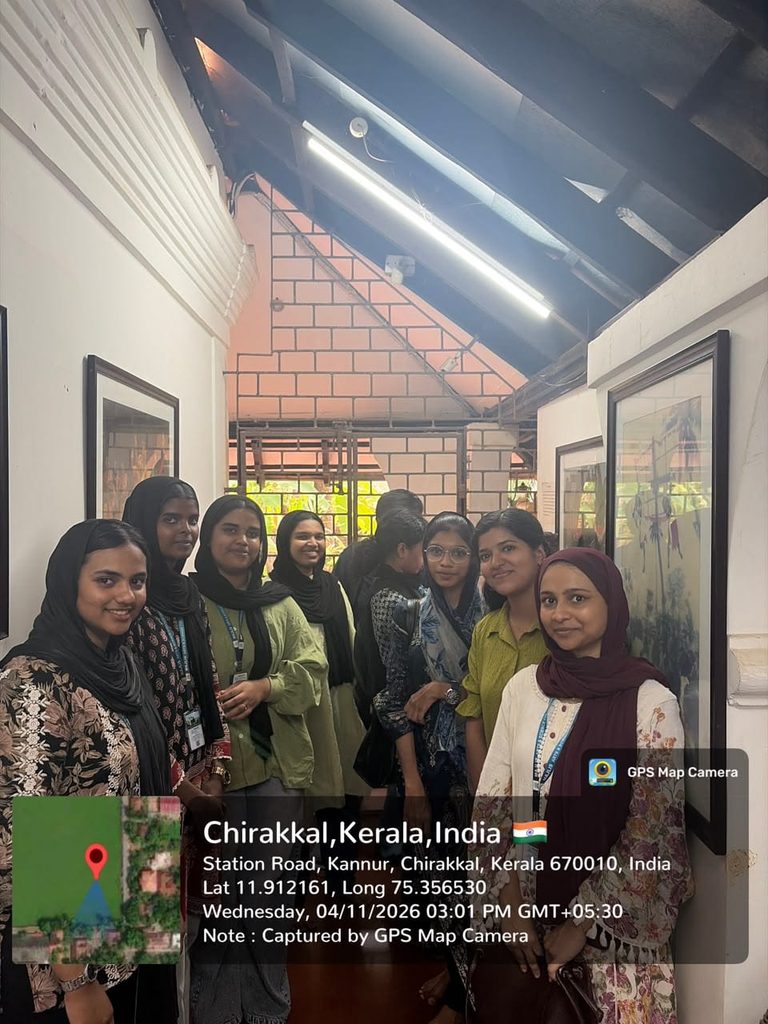
The final destination was Kerala Folklore Museum at Chirakkal. The museum preserves different aspects of Kerala’s traditional folk culture and heritage.
Students explored the preserved traditional objects, costumes, ornaments and other cultural artefacts. The visit provided an opportunity to understand the richness of Kerala’s folk traditions and the importance of conserving cultural heritage.
Activities and Learning Experiences
An important feature of the field visit was the active participation of students in the learning process. Students observed the different objects and artefacts preserved at each destination and learned about their historical and cultural significance.
Each student took an active role in explaining the places visited and their importance. This created an opportunity for peer learning, knowledge sharing and collaborative discussion.
The visit helped students understand how historical and cultural knowledge can be acquired through direct observation rather than relying entirely on classroom explanations.
Educational Significance and Learning Outcomes
The field visit provided several educational benefits:
- Students gained practical knowledge about historical monuments and museums.
- They developed an understanding of the importance of preserving historical and cultural objects.
- The activity encouraged peer teaching and collaborative learning.
- Students improved their observation, communication and presentation skills.
- The visit demonstrated the educational value of field-based learning.
- It helped students recognise museums and heritage sites as important informal learning spaces.
From a pedagogical perspective, the visit highlighted the importance of experiential learning, active participation and learning beyond the classroom.
The Pedagogy Field Visit to Kannur on 4 November 2026 was a meaningful and enriching educational experience for the participating students and teachers. The visit to St. Angelo Fort, Arakkal Museum and Kerala Folklore Museum provided valuable insights into the historical and cultural heritage of Kerala.
The active involvement of students through observation and explanation made the visit more interactive and educational. Overall, the programme successfully connected theoretical learning with practical experiences and highlighted the importance of field visits in teacher education.
Prepared by:
Second-Year ITEP Students
Majlis College
Accompanied by:
Aiswarya p
Afeeda O.

 NASEERALI MK