 Rushda M
PROGRAMME REPORT – DAY 1
Hands-on Experience on Histology and Immunological Techniques
Venue: Christ University, Bengaluru
Organized by: Department of Life Sciences, Christ University
Programme Coordinator: Dr. Krishnakumar V.
Day1
- Introduction
The “Hands-on Experience on Histology and Immunological Techniques” programme was organized by the Department of Life Sciences, Christ University, Bengaluru under the guidance and coordination of Dr. Krishnakumar V. The programme was designed to provide students with practical exposure to important histological and immunological techniques used in biological and medical research.
The first day of the programme included an inauguration ceremony, followed by practical sessions on histological tissue processing in the morning and immunological techniques in the afternoon.
- Inauguration Ceremony
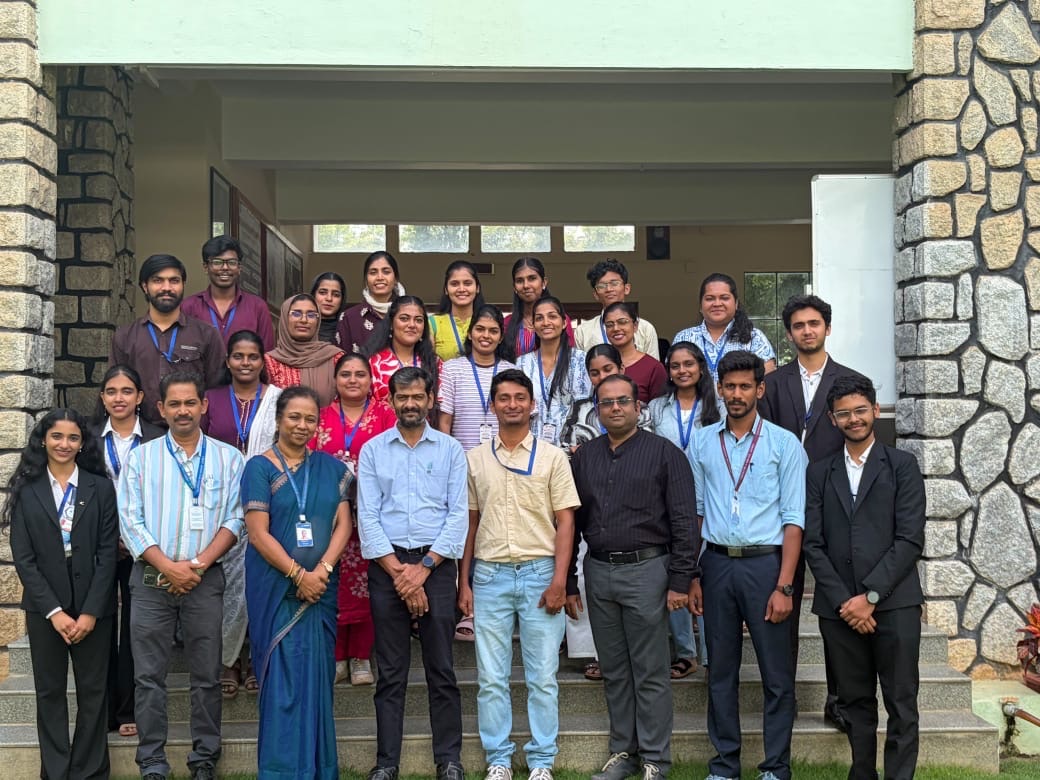
The programme began with an inauguration ceremony at Christ University. The ceremony marked the formal beginning of the hands-on training programme.
Dr. Sarjan H. L., Dr. Samson S., Dr. Vasantha V. L., Dr. Joahn Paul, and Dr. Krishnakumar V. participated in the inauguration and encouraged the students to actively participate in the practical sessions.
The faculty members highlighted the importance of gaining practical knowledge along with theoretical understanding. The inauguration created an encouraging environment for students to learn laboratory techniques and understand their applications in research.
. Morning Session – Histological Techniques
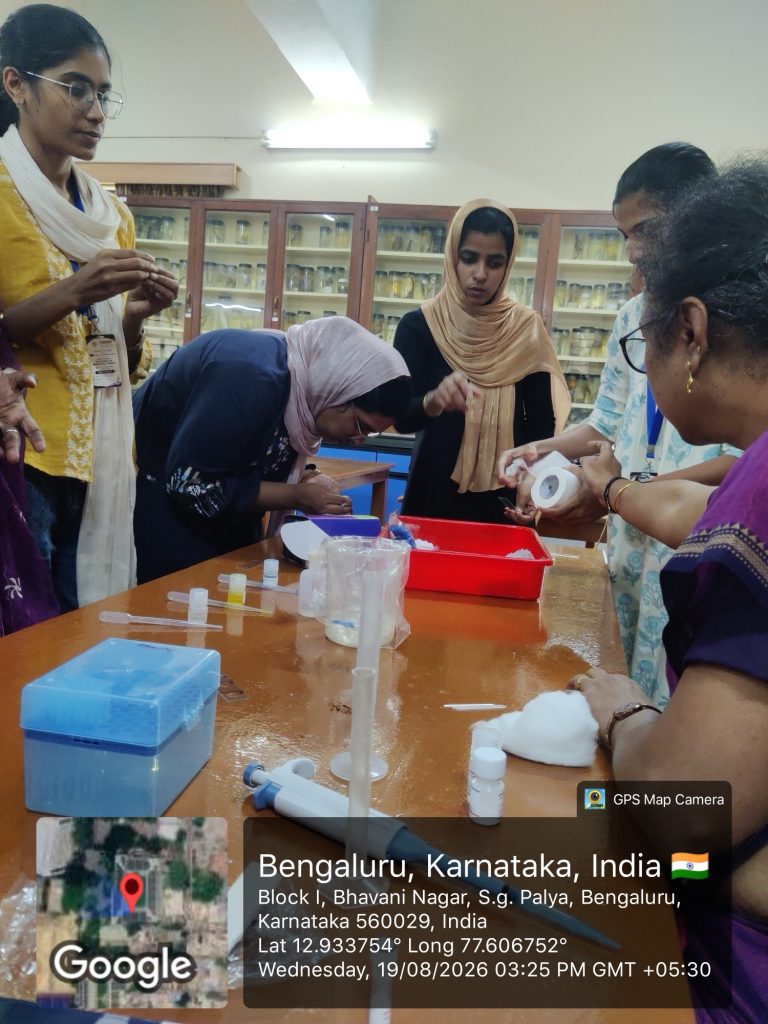
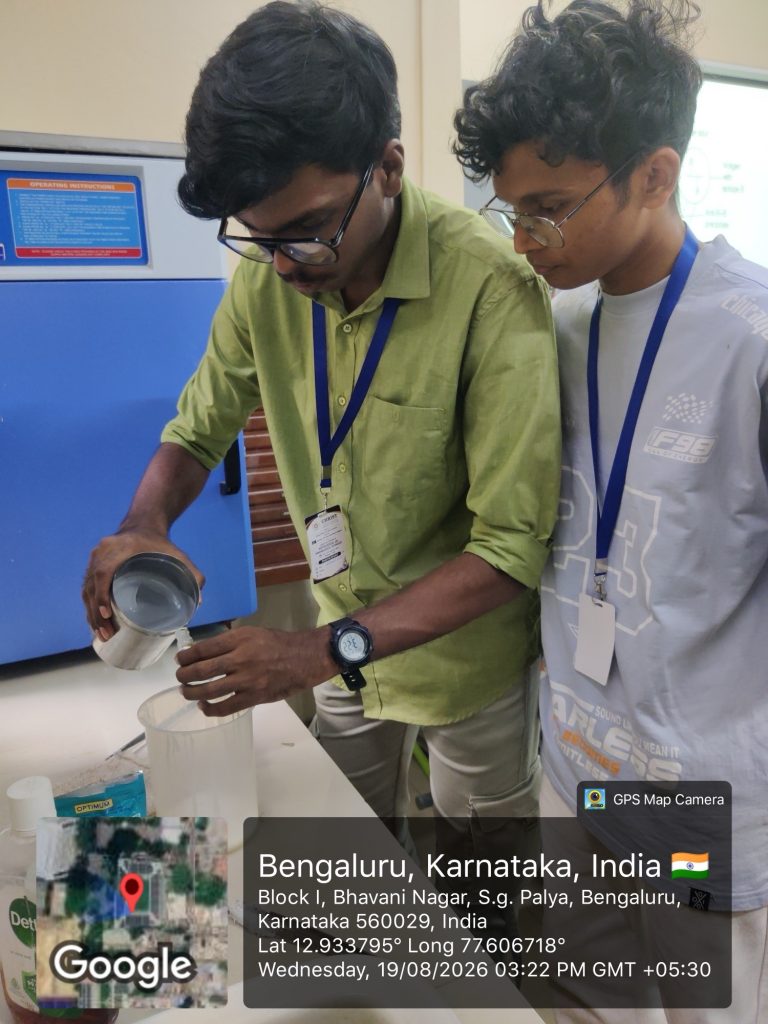
The morning session was handled by Dr. Sarjan H. L. and Dr. Samson S. They explained the basic principles and practical procedures involved in histological tissue processing.
A tissue sample needs to be properly processed before it can be sectioned and observed under a microscope. The different steps involved in tissue processing were explained clearly.
Dehydration
The first major practical step explained was dehydration. The purpose of dehydration is to gradually remove water from the tissue.
The tissue was passed through increasing concentrations of alcohol:
70% alcohol
80% alcohol
90% alcohol
100% alcohol
The final 100% alcohol step was repeated to ensure complete dehydration.
It was explained that gradual dehydration is important because sudden exposure to high-concentration alcohol can cause excessive shrinkage, hardening and damage to tissue.
Clearing
After dehydration, the tissue undergoes clearing. Chloroform was used as the clearing agent.
Clearing helps to remove alcohol from the tissue and prepares the tissue for the next step of paraffin infiltration.
Infiltration
The next step was paraffin infiltration. The tissue was treated with a mixture of chloroform and paraffin, followed by paraffin infiltration.
This step allows paraffin wax to enter the tissue and provide the required support for making thin sections.
Afternoon Session – Immunological Techniques
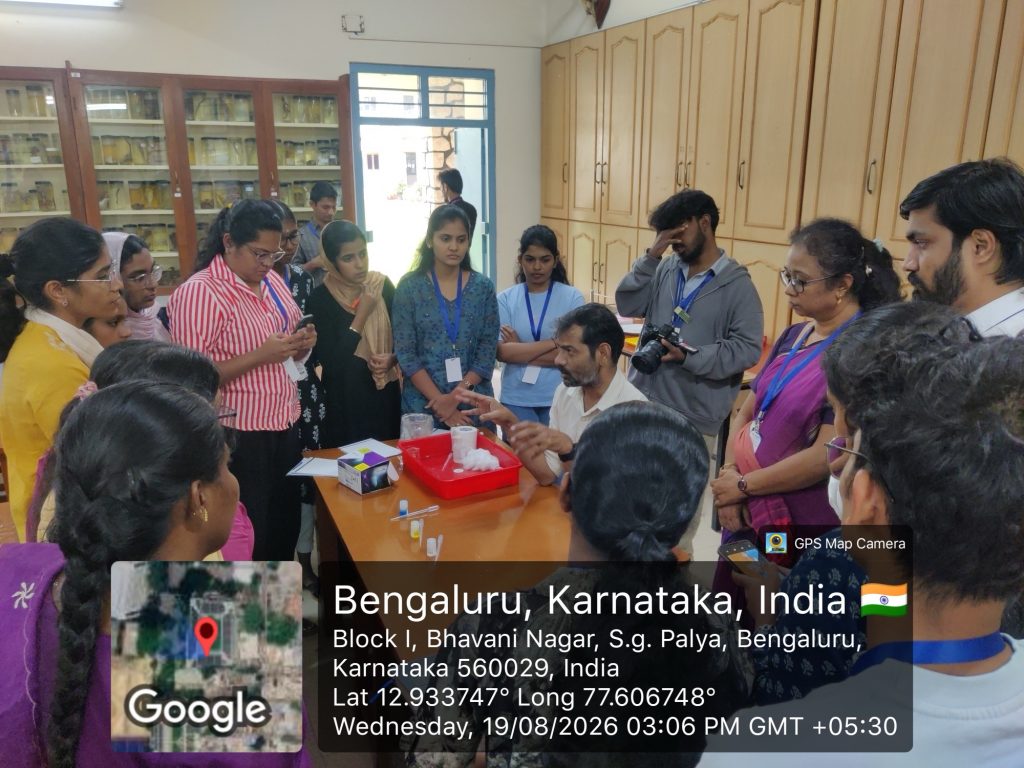
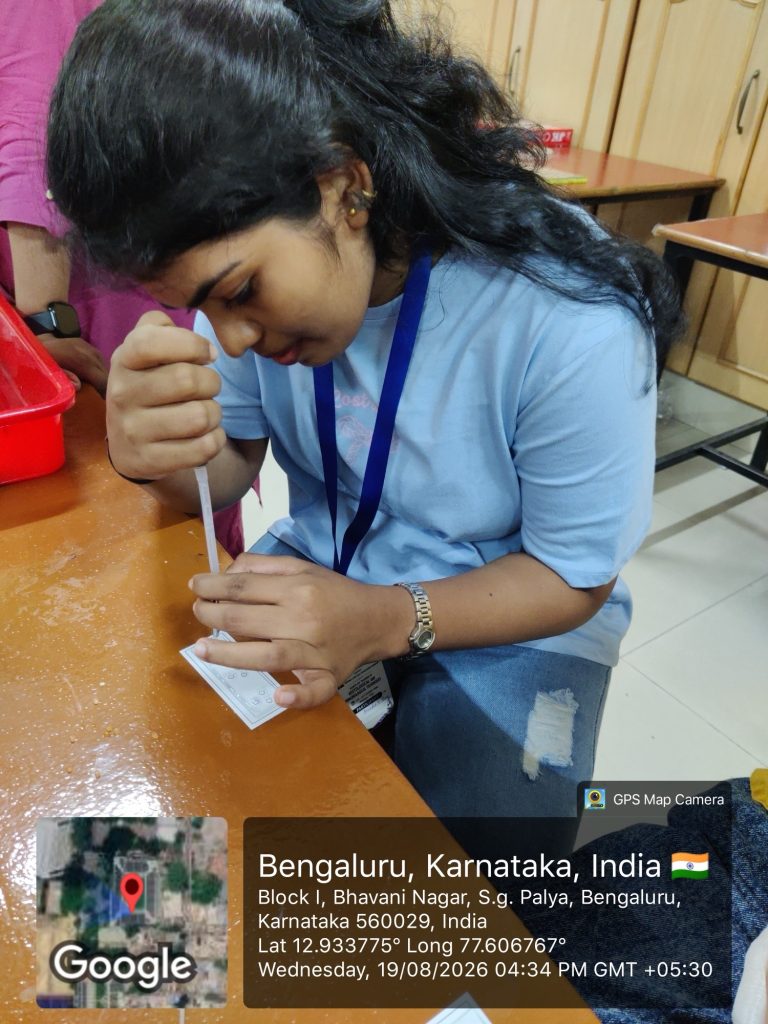
The afternoon session focused on immunological techniques. The session was conducted with the guidance of Dr. Vasantha V. L. and Dr. Joahn Paul.
The concepts and practical aspects of immunology were explained in a clear and understandable manner. The session helped students understand how immunological techniques are used for detecting and studying biological molecules, particularly antigens and antibodies.
The instructors explained the importance of proper handling of samples, reagents and laboratory materials while performing immunological experiments.
The practical demonstration made it easier for students to connect the theoretical concepts learned in class with their actual laboratory applications.
Learning Outcomes
At the end of Day 1, the students gained an understanding of:
The importance of tissue processing in histology.
The purpose of dehydration and the use of graded alcohol concentrations.
The importance of gradual dehydration in preventing tissue damage.
The role of chloroform in clearing.
The basic process of paraffin infiltration and embedding.
The basic principles and applications of immunological techniques.
The importance of careful handling of tissues, chemicals and laboratory equipment.
The practical connection between theoretical knowledge and laboratory procedures.
Conclusion
The first day of the Hands-on Experience on Histology and Immunological Techniques programme was highly informative and practical. The inauguration ceremony provided an excellent beginning to the programme, with the participation of Dr. Krishnakumar V., Dr. Sarjan H. L., Dr. Samson S., Dr. Vasantha V. L., and Dr. Joahn Paul.
The morning session provided valuable practical knowledge about dehydration, clearing, infiltration and embedding in histological tissue processing. The afternoon session introduced students to important immunological techniques and their applications.
Overall, Day 1 was an enriching learning experience that improved the students’ understanding of laboratory techniques and their importance in histology, immunology and biological research.

 ITEP Admin